How to Buy RMB in Nigeria: Complete Guide to Funding Alipay, WeChat Pay & Chinese Suppliers with Naira (2026)
The trade relationship between Nigeria (and Africa at large) and China has grown exponentially over the past decade. China remains Nigeria’s largest trading partner, serving as the primary source for electronics, fashion, machinery, consumer goods, and raw materials. Platforms like 1688, Taobao, Pinduoduo, and Alibaba have made global sourcing accessible to Nigerian importers, students, and businesses of all sizes.
However, one persistent challenge remains: how to reliably convert Naira to Chinese Yuan (RMB/CNY) and send it to suppliers in China. Because China’s economy operates heavily on digital wallets - especially Alipay (支付宝) and WeChat Pay (微信支付) - recipients often prefer receiving funds directly into these systems rather than traditional bank accounts.
This comprehensive, up-to-date guide explains all available options for buying RMB in Nigeria, with a detailed focus on modern solutions. Whether you are an importer settling factory invoices, a student paying tuition, or a trader buying from 1688, Taobao, Pinduoduo, or Alibaba, you’ll find clear, actionable information here.
Understanding the Chinese Payment Ecosystem
To pay Chinese suppliers effectively, you must understand how money moves in China:
Do more with your money on Sogo
Alipay (支付宝): The dominant mobile payment platform, especially for transactions on 1688, Taobao, Pinduoduo, and Alibaba. Most suppliers prefer Alipay for its speed and convenience.
WeChat Pay (微信 支付): Deeply integrated into WeChat, widely used for both personal and business payments. Many independent factories and suppliers favour this option.
Chinese Bank Accounts (UnionPay): Traditional transfers to banks like ICBC, Bank of China, or China Construction Bank (CCB) are still common for large corporate deals.
A reliable service must be able to deliver RMB directly into any of these three channels.
Options for Buying RMB in Nigeria
Nigerian businesses and individuals typically use three main methods. Each has its own strengths depending on your transaction size, urgency, and risk appetite.
1. Traditional Commercial Banks (Telegraphic Transfers)
This is the long-established route using Form M and SWIFT wire transfers.
How it works:
You apply for foreign exchange through your bank with supporting documents (proforma invoice, Form M, etc.). The bank then sends the funds to the supplier’s Chinese bank account.
Advantages:
Strong regulatory oversight and security.
Suitable for very large corporate transactions and trade finance instruments like Letters of Credit.
Provides formal documentation valued in official import processes.
Considerations:
Processing can take 3 to 10 business days.
Requires extensive paperwork and approvals.
Exchange rates and intermediary fees can vary.
Traditional banking remains a solid choice for high-value, highly regulated imports, but can feel slow for time-sensitive or smaller orders.
2. Informal Agents (Parallel Market)
Many importers use local currency brokers operating via WhatsApp or Telegram.
How it works:
You transfer Naira locally, and the agent uses their network in China to credit RMB directly to your supplier’s Alipay, WeChat Pay, or bank account.
Advantages:
Very fast (often within hours).
Minimal documentation required.
Considerations:
Unregulated and High Risk: The parallel market lacks oversight. There is significant potential for fraud, non-delivery, or loss of funds with little to no recourse.
Inconsistent and Expensive Rates: Exchange rates can include large markups and fluctuate unpredictably based on the agent’s supply.
Account Restriction Risk: A major concern is that funds from informal channels are sometimes viewed as “suspicious” or not properly documented by Chinese payment platforms. If Alipay or WeChat Pay flags the incoming RMB as potentially unclean or from an unregulated source, the recipient’s account can be temporarily or permanently restricted. This can freeze the supplier’s funds, delay order processing, damage business relationships, and create complications for both parties.
While informal agents may seem convenient for urgent small transfers, the combination of financial risk and potential downstream issues for your Chinese supplier makes them less ideal for regular or high-value business.
3. Modern Fintech Solutions - The Sogo Advantage
Fintech platforms have emerged to combine the security of banks with the speed of informal channels, while adding transparency and an excellent user experience.
Sogo is specifically built for the African-Chinese trade corridor, serving users in Nigeria who regularly transact with China.
Why Choose Sogo to Buy RMB?
Sogo stands out by solving the real pain points of cross-border payments:
Lightning Speed: Funds typically arrive in the recipient’s Alipay, WeChat Pay, or Chinese bank account within 5 to 30 minutes.
Direct Delivery: Send straight to digital wallets - exactly what most Chinese suppliers on 1688, Taobao, Pinduoduo, and Alibaba prefer today.
Transparent Rates: Live market-linked exchange rates shown upfront. You see the exact Naira-to-RMB conversion before confirming. No hidden fees.
High Security & Compliance: Full KYC/AML processes, secure infrastructure, and transaction monitoring that help ensure funds arrive “clean” and reduce the risk of recipient account restrictions.
Local Funding: Fund easily with Naira via virtual bank accounts.
Verifiable Receipts: Professional receipts you can instantly share with suppliers.
User-Friendly: Intuitive app and web dashboard designed for both beginners and experienced importers.
Thousands of Nigerian businesses now rely on Sogo for its reliability and efficiency.
Complete Step-by-Step Guide: How to Buy RMB on Sogo
Here is the full process:
Step 1: Create and Verify Your Sogo Account
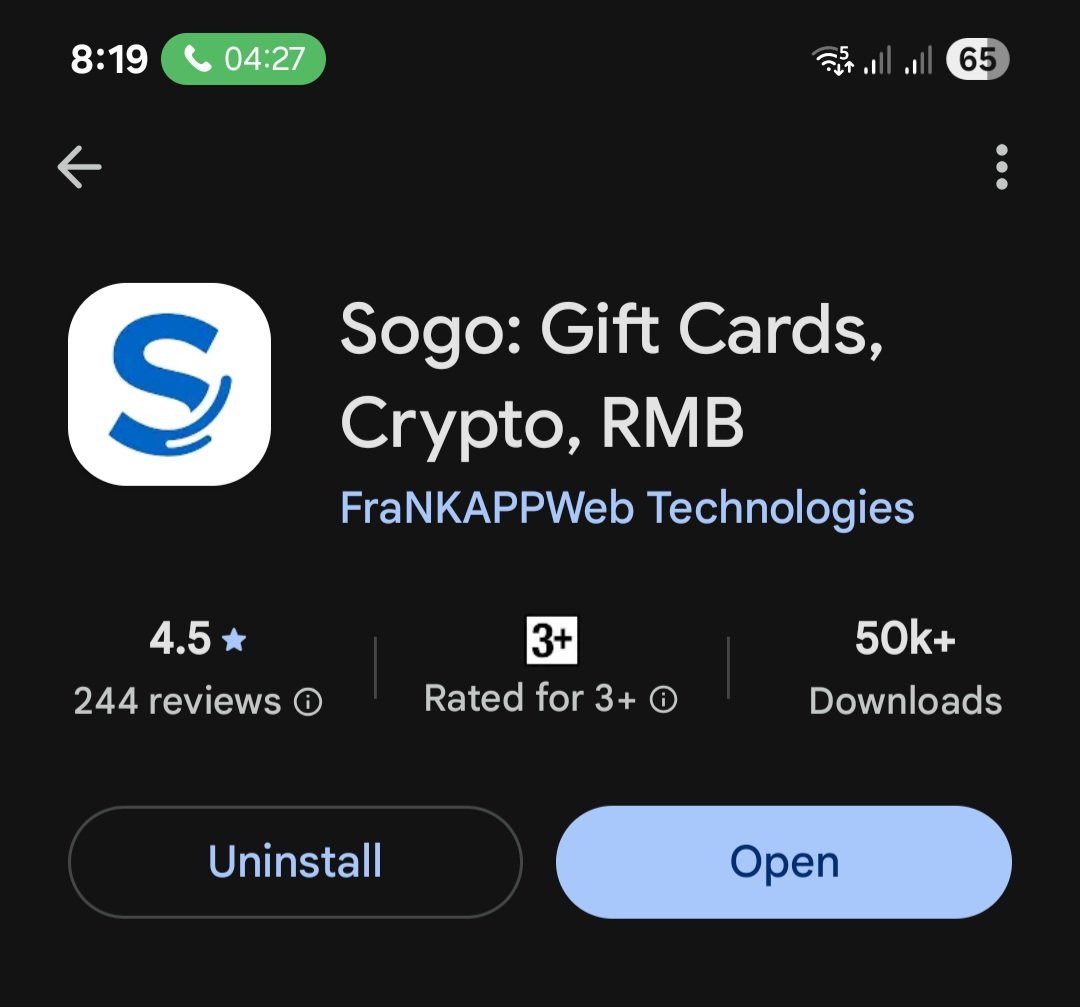
Download the Sogo App from the Google Play Store or Apple App Store, or visit the Sogo Web Dashboard.
Sign up with your email and phone number.
Complete KYC (Tier 2 Verification) by entering a valid identification number (BVN or NIN, with a selfie image). This unlocks full RMB sending capabilities.
Step 2: Set Up Your Transaction PIN
For security, create a 4-digit Transaction PIN. This will be required to authorise every transfer.
Step 3: Fund Your Sogo Wallet with Naira
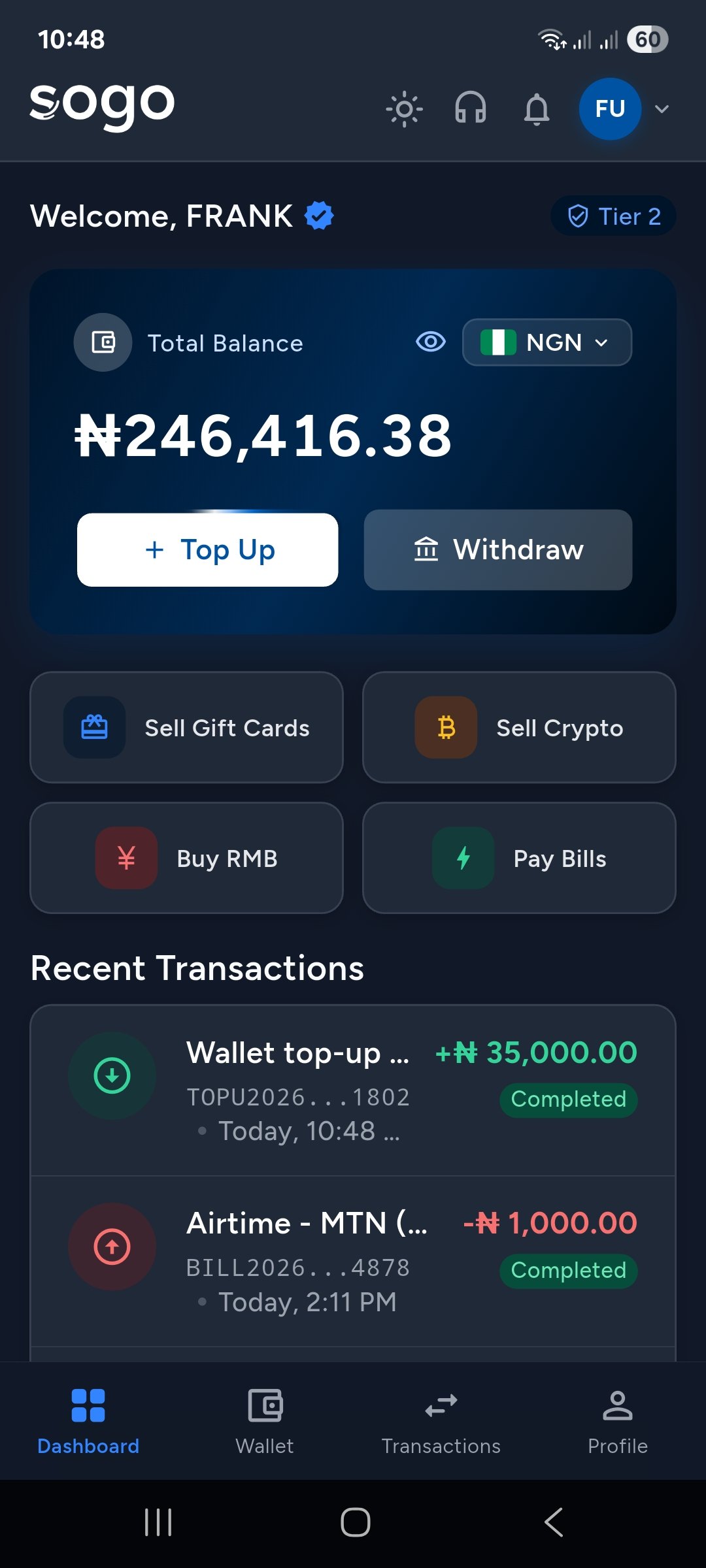
Go to the Dashboard or Wallet tab.
Tap Top Up.
Sogo generates a dedicated virtual bank account.
Transfer money from your Nigerian bank (GTBank, Zenith, Access, etc.) to this account. Funds reflect almost instantly.
Step 4: Initiate the “Buy RMB” Transaction
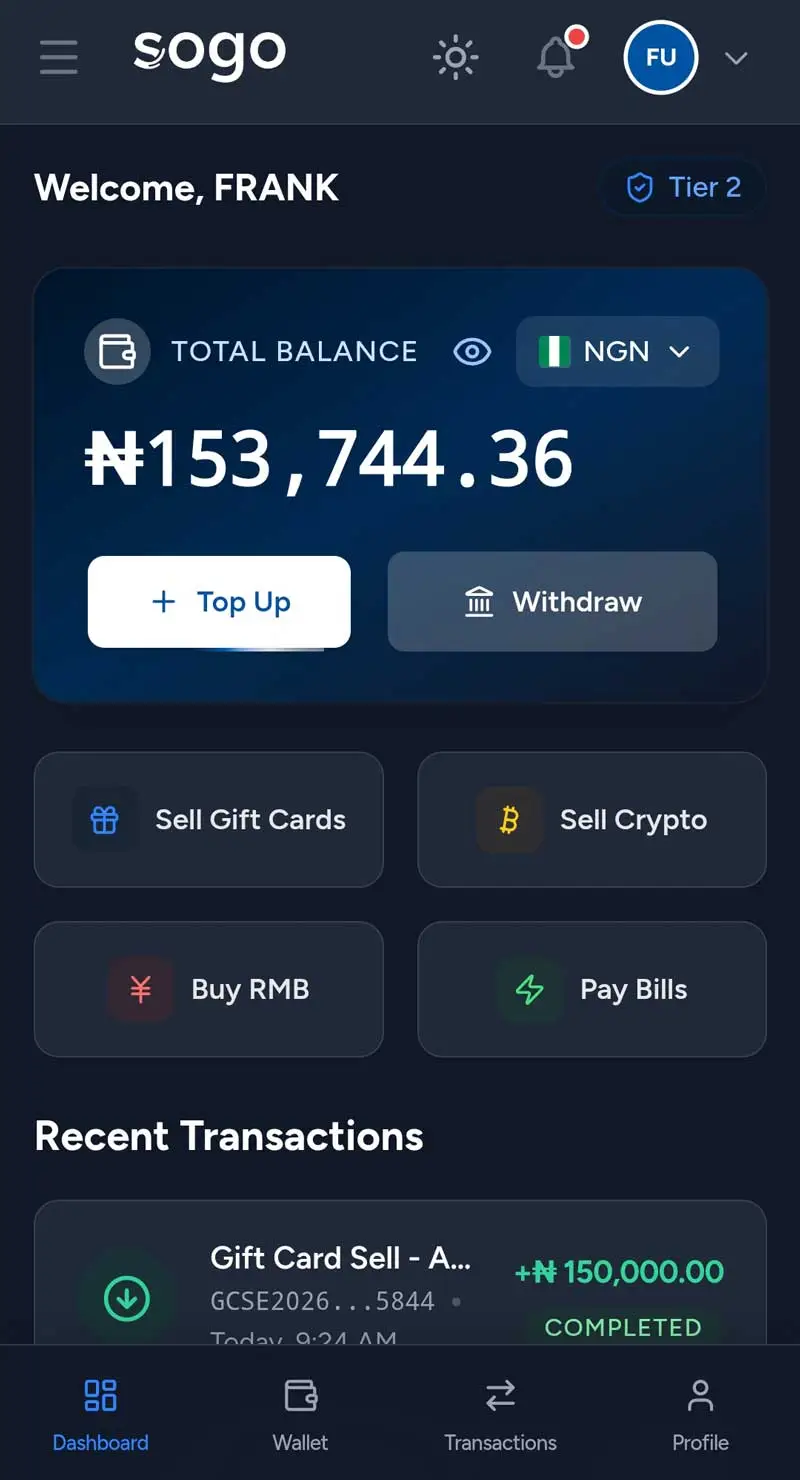
On the home screen, tap the Buy RMB icon (marked with ¥).
Choose your destination:
Alipay: Recipient’s phone number or email
WeChat Pay: Recipient’s WeChat ID or phone number
Chinese Bank Account: Bank name, account number, and exact account name
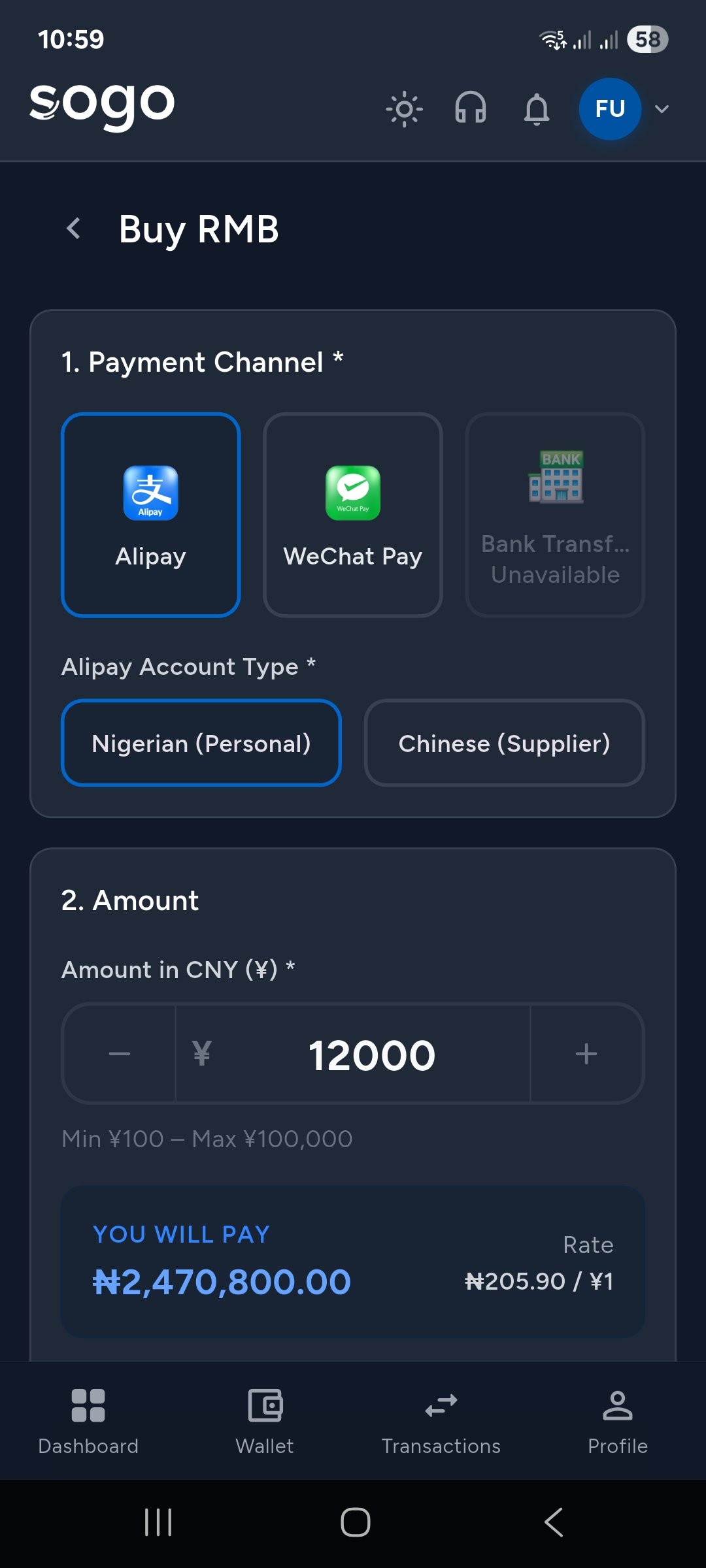
Step 5: Enter Amount and Review
Input the RMB amount you want to send.
The app instantly shows the exact Naira equivalent using the live exchange rate.
Carefully review all details on the summary screen.
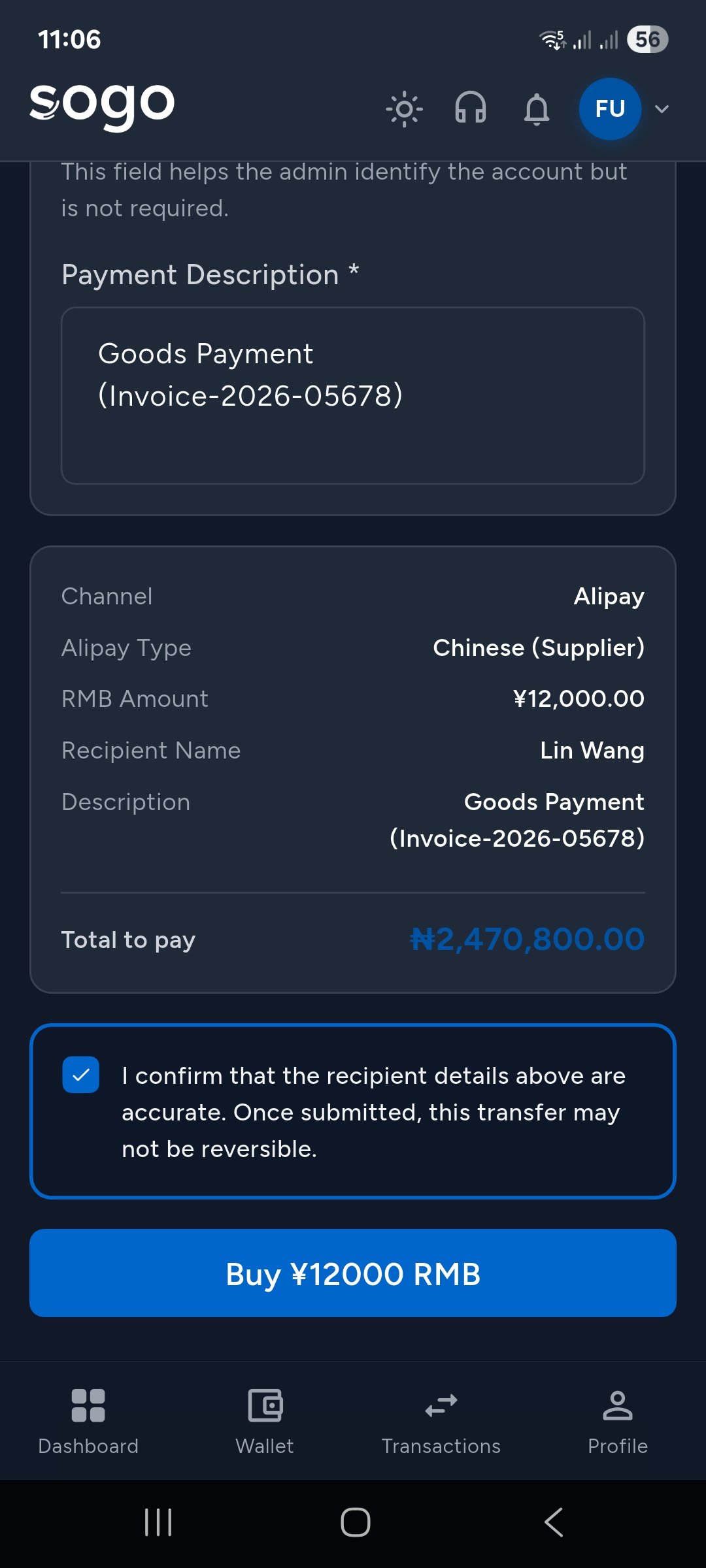
Step 6: Confirm and Pay
Enter your Transaction PIN.
Tap Confirm.
Your transaction moves to processing. Most payments complete within 5 to 30 minutes.
Once done, download the receipt and share it with your supplier via WhatsApp or WeChat as proof of payment. It will also contain evidence of payment directly from Alipay or WeChat Pay.
Who Should Use Sogo?
Importers sourcing from 1688, Taobao, Pinduoduo, Alibaba, or direct factories.
Students paying tuition and living expenses in China.
SMEs and traders handling regular supplier payments.
Anyone who values speed, transparency, compliance, and peace of mind.
Frequently Asked Questions (FAQs)
Q: How fast do recipients receive the RMB?
A: Usually within 5 to 30 minutes after confirmation.
Q: Can I use Sogo for payments on 1688, Taobao, Pinduoduo, and Alibaba?
A: Yes. Suppliers on these platforms widely accept Alipay and WeChat Pay, which Sogo funds directly.
Q: Do I need a Chinese bank account?
A: No. You only need your supplier’s details.
Q: What are the limits?
A: Limits depend on your KYC tier. Higher verification allows larger volumes.
Q: Is Sogo safe?
A: Yes. It follows strict regulatory standards with robust security measures.
Conclusion
Buying RMB in Nigeria no longer needs to be complicated, slow, or risky. While traditional banks continue to play an important role for large-scale corporate trade, and informal channels offer quick but riskier options (including potential Alipay/WeChat restrictions), modern fintech platforms like Sogo deliver the best balance of speed, security, transparency, and compliance for most users.
Sogo empowers Nigerian businesses and individuals to participate more effectively in the thriving Africa-China trade corridor.
Ready to send RMB the smart way?
Download the Sogo App on Google Play or the Apple App Store, or Register on our Web Dashboard today and make your first payment in minutes.
This guide is updated for 2026. Bookmark it for future reference as payment solutions continue to evolve.